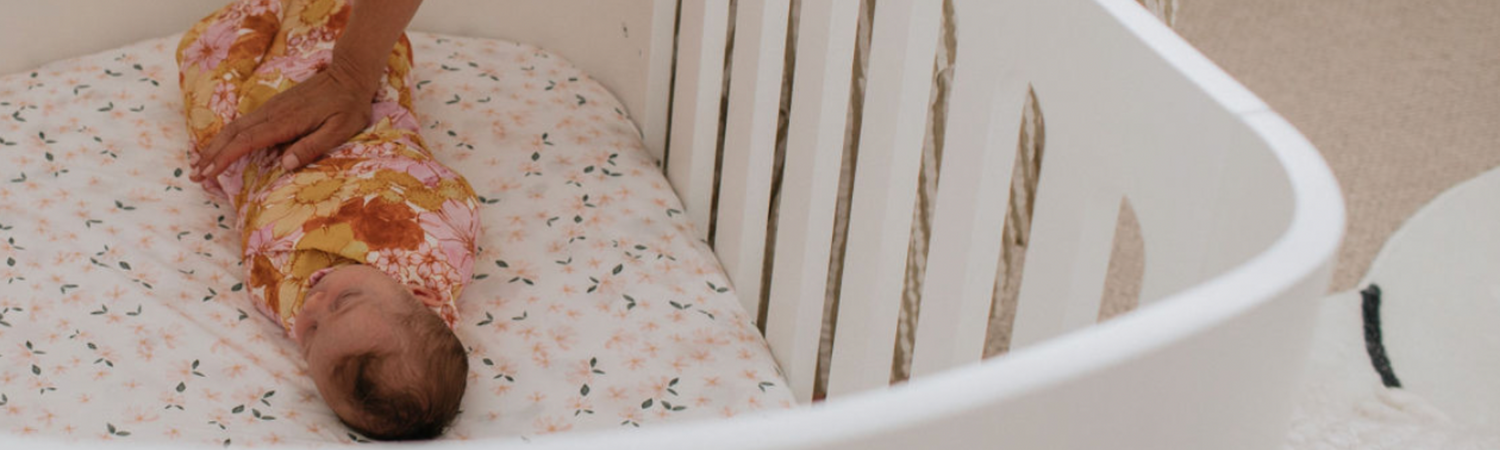

Have you ever looked at your baby and thought, “Are you actually tired?”
Maybe they’ve started yawning and rubbing their eyes, so you put them down for a nap… only for them to spend the next 20 minutes happily rolling around their cot.
Or perhaps bedtime arrives and suddenly your exhausted baby seems to get a second wind - laughing, wriggling, crying or fighting sleep with everything they’ve got.
Working out when your baby is actually ready for sleep can be tricky.
While tired signs can give us helpful clues, they’re only one piece of the puzzle. Understanding the difference between an undertired, tired and overtired baby can make it much easier to find that sweet spot for naps and bedtime.
What Are Baby Tired Signs?
Tired signs are the little changes in your baby's behaviour that can tell you they're becoming ready for sleep.
Some are very obvious (like yawning or rubbing their eyes) while others can be much more subtle.
And to make things even trickier, tired signs can change as your baby gets older.
This is why we don't recommend relying on one tired sign alone. Instead, look at your baby's behaviour alongside their age-appropriate awake times and overall routine.
Signs Your Baby Is Undertired
Sometimes we see a yawn and immediately think, Nap time!
But yawning doesn't always mean your baby is ready to sleep.
If your little one hasn't had enough awake time before their nap or bedtime, they may simply not have built up enough sleep pressure to fall asleep easily or stay asleep for a restorative sleep.
Some signs your baby may be undertired include:
- Happily playing, chatting or rolling around in their cot
- Taking a long time to fall asleep without becoming particularly upset
- Consistently fighting their usual nap time
- Waking after a short nap feeling happy and refreshed
- Bedtime regularly taking a long time
- Wanting to play rather than settle
If this is happening consistently, it may be worth looking at whether your baby's awake time needs a small adjustment.
Signs Your Baby Is Ready for Sleep
This is the sweet spot we're looking for.
Your baby has built enough sleep pressure to be ready for their nap or bedtime, but they haven't yet tipped into overtiredness.
You might notice your baby:
- Becoming quieter
- Losing interest in toys or play
- Staring into the distance
- Becoming slightly more clingy
- Rubbing their eyes
- Yawning
- Becoming less active
- Looking for comfort
These signs can be subtle, particularly in older babies, which is why knowing roughly when your baby is due for their next sleep can be so helpful.
Signs Your Baby Is Overtired
This is where baby sleep can become confusing.
You'd think an overtired baby would simply look exhausted, right?
Not always!
When babies stay awake beyond the point where their body is ready for sleep, they can become increasingly unsettled and may appear to get a sudden burst of energy.
That "second wind" you sometimes see before bed can actually be a sign that your little one has become overtired.
Signs can include:
- Crying or becoming very unsettled before sleep
- Arching their back or resisting being held
- Becoming hyperactive, silly or unusually energetic
- Fighting sleep despite clearly being tired
- Finding it difficult to settle
- Waking shortly after falling asleep
- Taking short, unsettled naps
- Increased overnight waking or early rising
This doesn't mean every difficult bedtime is caused by overtiredness, but if you're seeing these patterns regularly, it's worth taking a closer look at your baby's routine.
Why Can an Overtired Baby Look Wide Awake?
This is something that catches so many parents out.
Your baby has been grizzly and tired all afternoon, but the moment you start the bedtime routine they suddenly seem ready to party.
When a baby becomes overtired, their body can produce stress hormones that make it harder for them to wind down and fall asleep.
So that sudden burst of energy doesn't necessarily mean, “I'm not tired.”
It can sometimes mean, “I've gone past tired.”
Tired Signs vs Awake Windows: Which Should You Follow?
We don't believe it needs to be one or the other.
Awake windows are a really useful guide to how long your baby may comfortably manage between sleeps, but they aren't an exact science.
Your baby's individual sleep needs matter too.
One 7-month-old may comfortably manage a certain awake window while another baby of exactly the same age needs slightly more or less.
That's why we recommend looking at three things together:
1. Your baby's age-appropriate awake windows
Use these as your starting point rather than a strict countdown.
2. Your baby's tired signs
Watch for changes in their behaviour as you approach their usual sleep time.
3. What happens when you put them down
This is often the biggest clue of all.
If your baby consistently takes a long time to fall asleep and is perfectly happy in their cot, they may need a little more awake time.
If they're consistently very upset, difficult to settle or seem exhausted before you even begin the bedtime routine, you may need to bring sleep forward.
It's about getting to know your baby rather than trying to follow a schedule perfectly.
Do Tired Signs Change as Babies Get Older?
Absolutely.
Tired signs tend to be particularly helpful with younger babies because their awake periods are shorter and their sleep needs are constantly changing.
As babies get older, those signs can become less reliable.
An older baby or toddler might yawn because they're bored, rub their eyes because they've just woken up or suddenly become energetic when they're actually exhausted.
Their days also become more predictable.
This is where having an age-appropriate routine becomes really helpful.
Instead of waiting until your baby is showing obvious signs of exhaustion, you have a general idea of when their naps and bedtime should fall and can use their behaviour to make small adjustments.
What If I've Missed the Sleep Window?
Don't panic.
Missing the "perfect" sleep window doesn't mean you've ruined the nap or that your whole night will fall apart.
Babies aren't robots, and real life doesn't always fit neatly around nap times.
If your little one seems overtired, keep things calm and reduce stimulation. Dim the lights, move into their sleep space and continue with your usual wind-down and settling routine.
You may also need to adjust the rest of the day slightly, for example, bringing the next nap or bedtime forward if they've had less sleep than usual.
One tricky nap doesn't need to dictate the rest of your day.
One of the easiest traps to fall into with baby sleep is analysing every yawn, every nap and every awake window.
Instead, look for patterns over several days.
Ask yourself:
- Is my baby generally happy during their awake time?
- Are they falling asleep relatively easily?
- Are they waking happy from most naps?
- Are we getting at least one restorative nap?
- Is bedtime working?
- How is their overnight sleep?
If things are generally working, you probably don't need to change anything.
But if naps are becoming a battle, your baby is consistently waking after 30 minutes, bedtime is getting harder or nights are suddenly more unsettled, their routine may need a little tweak.
Finding Your Baby's Sleep Sweet Spot
There isn't one perfect awake window or routine that works for every baby.
Age-appropriate sleep guidelines give us a fantastic starting point, but your baby's individual sleep needs will always matter too.
The goal is to find the balance between enough awake time to build sleep pressure, without pushing your little one into overtiredness.
Once you start looking at your baby's tired signs, awake windows and sleep patterns together, it becomes much easier to understand what they're trying to tell you.
And hopefully, there's a lot less wondering: "Are you actually tired?!"
If you're constantly second-guessing nap times, awake windows or bedtime, our age-specific Sleep Guides can help take the guesswork out of your little one's sleep.
Inside you'll find age-appropriate routines, awake times, gentle settling methods and practical troubleshooting to help you understand what your baby needs at every stage 😴