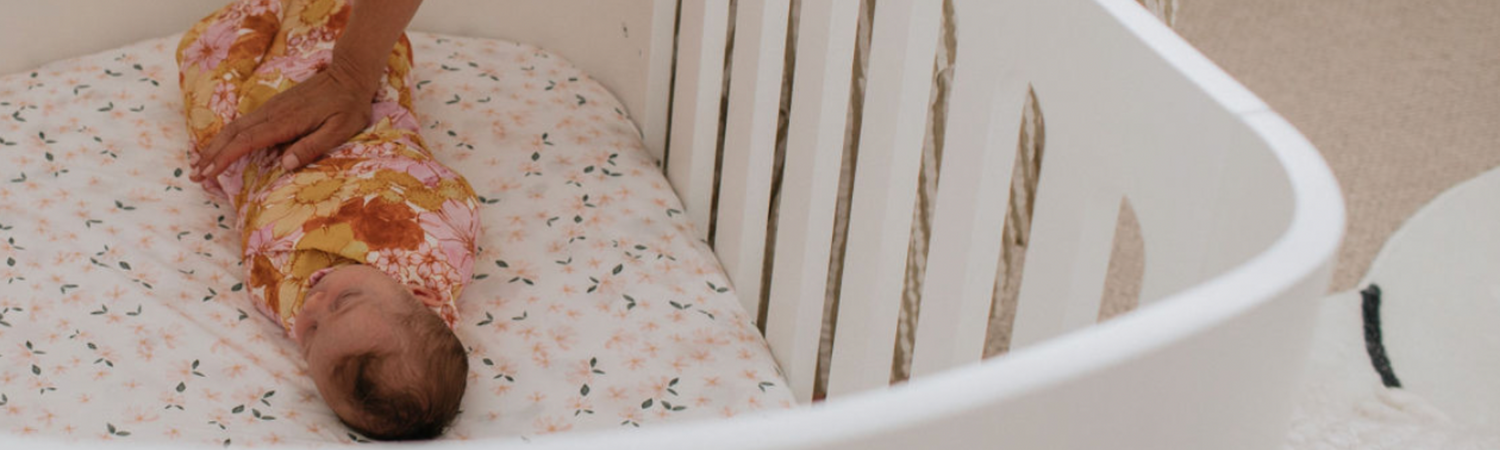

You’ve done bedtime. Your baby is asleep. You’ve finally sat down, made dinner or started catching up on everything you couldn’t do during the day... and 30–60 minutes later, they’re awake again.
Sound familiar?
This is what we often call a false start, when your baby falls asleep at bedtime but wakes again shortly afterwards, often around the end of their first sleep cycle.
The occasional false start is completely normal. But if your baby is waking shortly after bedtime night after night, it can be a sign that something in their routine, settling or sleep environment needs a little tweaking.
So, why do false starts happen, and what can you do about them?
What is a false start in baby sleep?
A false start is when your baby goes to sleep for the night but wakes again within approximately 30–60 minutes of bedtime.
Sometimes they wake crying and clearly still tired. Other times, they wake completely happy and ready to party! And that difference can actually give us some clues about what might be going on.
False starts aren't caused by one single thing. We want to look at your baby's whole day - their naps, awake windows, feeds, bedtime, settling and sleep environment.
Here are some of the most common things we look at:
1. Getting a little "reset" too close to bedtime
That lovely sleepy bedtime feed can sometimes work against us. If your baby becomes very drowsy or briefly dozes during their last feed, they may get a little reset before bedtime. They might then happily go to sleep, only to wake again shortly afterwards because they didn't have quite enough sleep pressure to stay asleep.
Try moving the final feed to around 30 minutes before bedtime and keeping it an awake feed where possible. Then move through the rest of your bedtime routine before placing bub down for sleep.
2. Their body clock might need some consistency
Your baby's circadian rhythm, or internal body clock, helps their body understand the difference between daytime and nighttime. One simple way to support this is to aim to start your baby's day at roughly the same time each morning.
For older babies, we generally aim for around an 11–12 hour day before nighttime sleep. This can help create a predictable rhythm and build enough sleep pressure for bedtime.
If morning wake time, naps and bedtime are changing dramatically from day to day, your baby's body can have a harder time knowing when that long nighttime stretch should begin.
3. Your baby is still very young
If your baby is under approximately 3 months old, what looks like a false start may actually be completely normal newborn sleep.
Young babies don't yet have the same established circadian rhythm as older babies. Their body clock develops gradually over the first few months, so a traditional 6–7pm bedtime may simply feel like another nap.
For many newborns, a later bedtime around 8–10pm can be more appropriate before bedtime naturally starts shifting earlier. So if your 8-week-old wakes after being put down at 6:30pm, don't panic. It doesn't necessarily mean anything is "wrong" with their sleep.
4. The final awake window needs tweaking
This is a big one. A false start can happen when your baby is overtired OR undertired. If the final awake window is too long, your baby may fall asleep quickly because they're exhausted, but struggle to stay asleep.
Signs your baby may be overtired include:
- A long final awake window
- Distressed crying at bedtime
- Falling asleep very quickly
- Waking around 30 minutes later crying and still tired
- Pushing away or becoming increasingly upset while you try to settle them
On the other hand, if your baby's final awake window is too short, they may simply not have built enough sleep pressure for nighttime sleep.
Signs your baby may be undertired include:
- Few or no tired signs before bed
- Fighting bedtime but remaining happy or playful
- Taking a long time to fall asleep
- Waking around 45–60 minutes later happy, alert and ready to go
This is where an age-appropriate baby sleep routine can be really helpful. Sometimes the answer isn't an earlier bedtime or a later bedtime, it's adjusting the timing of that final nap or awake window.
5. How your baby falls asleep
We all naturally move through different stages and cycles of sleep throughout the night. If your baby falls asleep with a lot of support (perhaps feeding, rocking or having their dummy replaced) they may look for that same support when they stir between sleep cycles.
This doesn't mean you have to change something that is working well for your family. But if your baby is consistently waking after one sleep cycle and needs the exact same help to fall asleep again, it may be worth looking at how they are getting to sleep at bedtime.
Helping your baby learn to settle independently from awake can make it easier for them to move between sleep cycles without needing you to recreate the conditions they initially fell asleep with.
6. Check the sleep environment
Your baby might have enough sleep pressure to fall asleep initially, but something in their environment may make it harder to stay asleep.
Have a quick check of their room:
- Is it nice and dark, even when there's still evening light outside?
- Is the room at a comfortable temperature?
- Are they dressed appropriately for the temperature?
- Is there noise from the rest of the house as everyone settles into the evening?
- Could consistent white noise help mask household or outside sounds?
A dark room, comfortable temperature and consistent white noise can help create an environment that supports deeper, more settled sleep.
So, how do you stop false starts?
Rather than changing everything at once, take a look at the bigger picture.
Start with your baby's morning wake time and daytime routine. Check their naps and final awake window. Make sure their last feed isn't becoming a sneaky little nap. Look at how they're falling asleep and whether their sleep environment is supporting them to stay asleep.
Most importantly, look for patterns. One false start doesn't mean you need to overhaul your baby's entire routine. But if you're doing bedtime twice every single night, that's when it's worth doing a little troubleshooting.
Our Sleep Guides give you age-appropriate routines, settling methods and troubleshooting strategies so you can understand exactly what your little one needs at their current age.
Or, if you'd prefer someone to look at your baby's sleep as a whole, book a 1:1 Sleep Consult. We'll look at what's happening during the day, at bedtime and overnight and create a clear, personalised plan for your family. Because bedtime shouldn't have to happen twice. 💜